
Resource
Resource Centre
Free science-based materials and practical resources from NUTRIGENOVIA.
 Evidence Tools
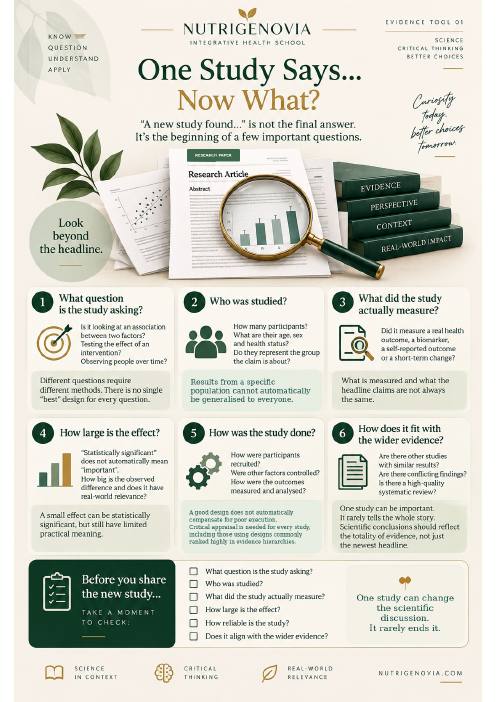
One Study Says... Now What?
“A new study found...” is not the final answer. It’s the beginning of a few important questions.
Free access
 Evidence Tools
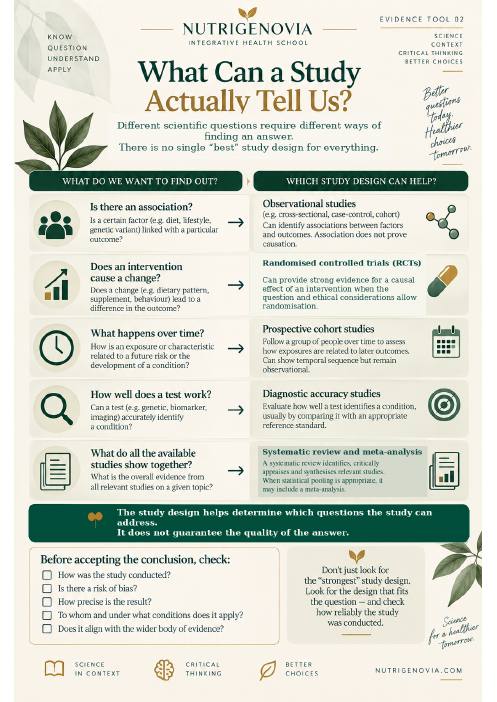
What Can a Study Actually Tell Us?
Different scientific questions require different ways of finding an answer.
Free access
 Evidence Tools
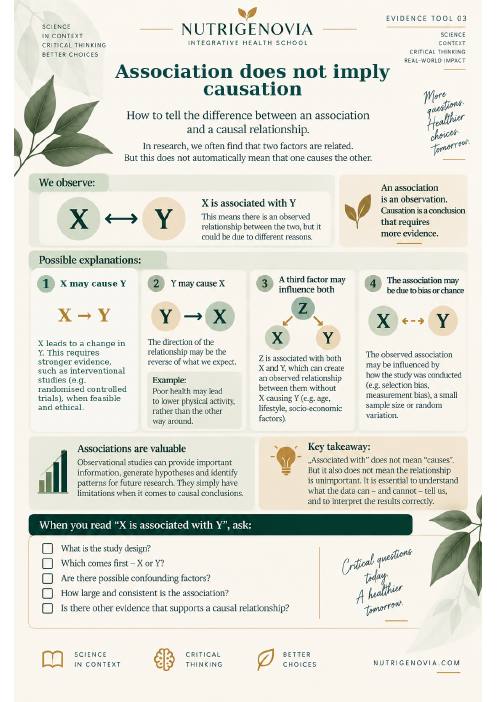
Association Does Not Imply Causation
How to tell the difference between an association and a causal relationship.
Free access
 Evidence Tools
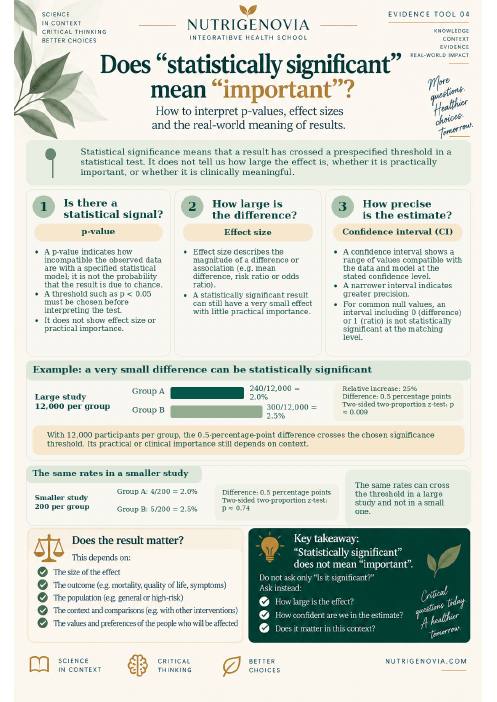
Does “Statistically Significant” Mean “Important”?
How to interpret p-values, effect sizes and the real-world meaning of results.
Free access
 Evidence Tools
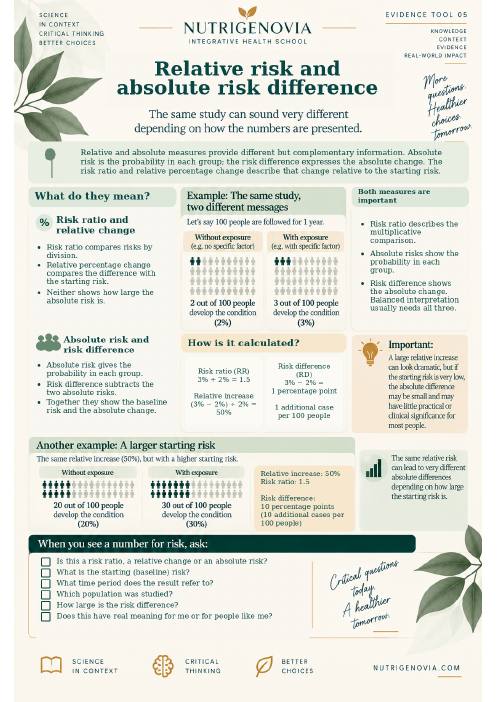
Relative Risk and Absolute Risk Difference
The same study can sound very different depending on how the numbers are presented.
Free access
 Evidence Tools
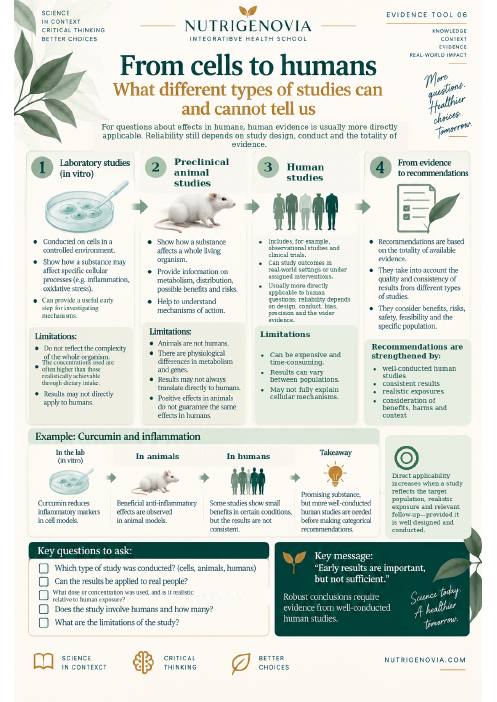
From Cells to Humans
What different types of studies can and cannot tell us.
Free access
 Evidence Tools
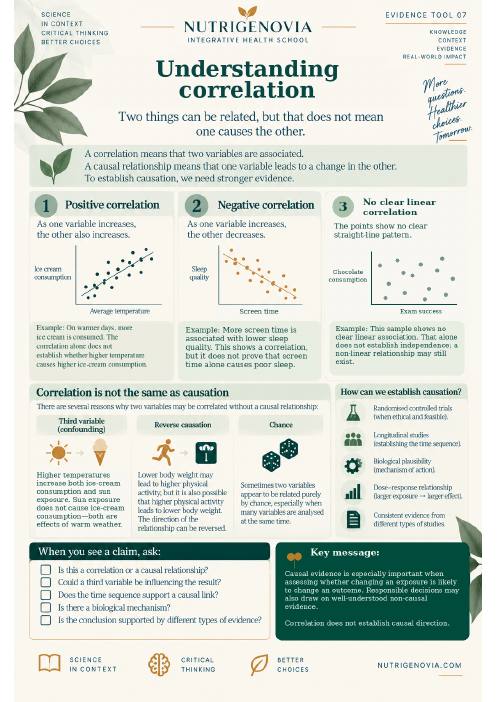
Understanding Correlation
Two things can be related, but that does not mean one causes the other.
Free access
 Evidence Tools
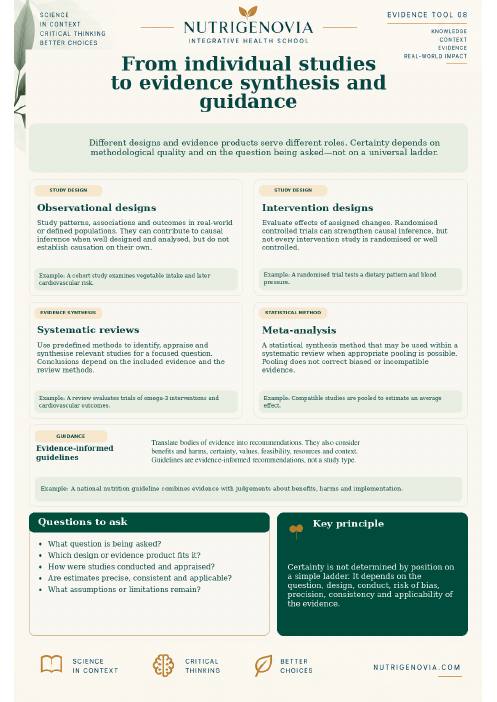
From Individual Studies to Evidence Synthesis and Guidance
Different designs and evidence products serve different roles. Certainty depends on methodological quality and on the question being asked.
Free access
 Evidence Tools
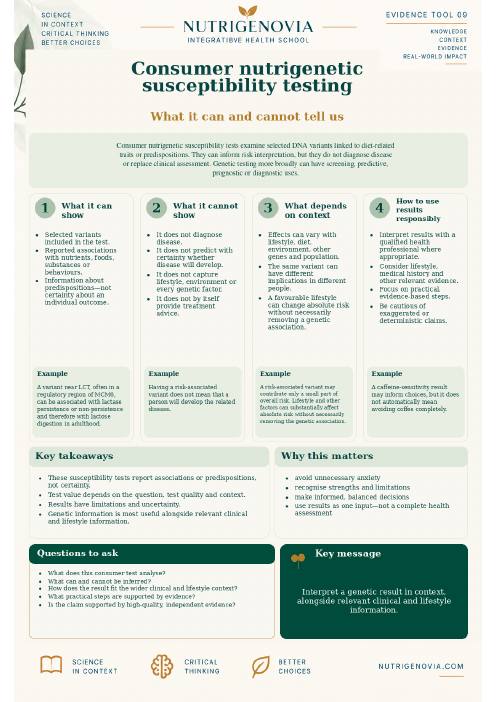
Consumer Nutrigenetic Susceptibility Testing
What it can and cannot tell us.
Free access
 Evidence Tools
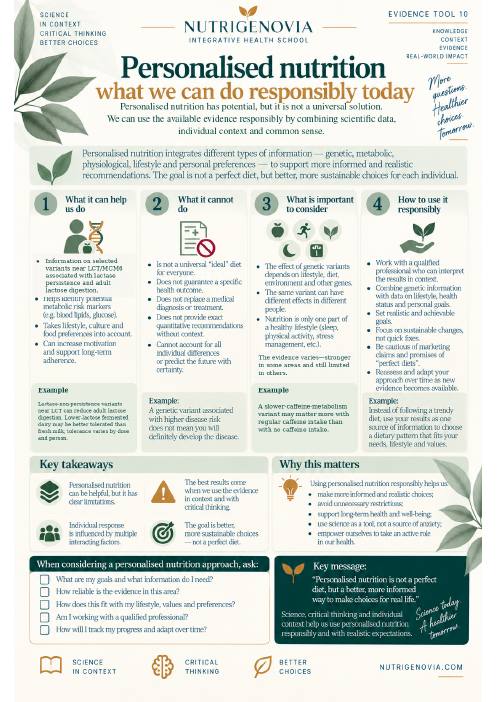
Personalised Nutrition: What We Can Do Responsibly Today
Personalised nutrition has potential, but it is not a universal solution.
Free access
 Practitioner Toolkit
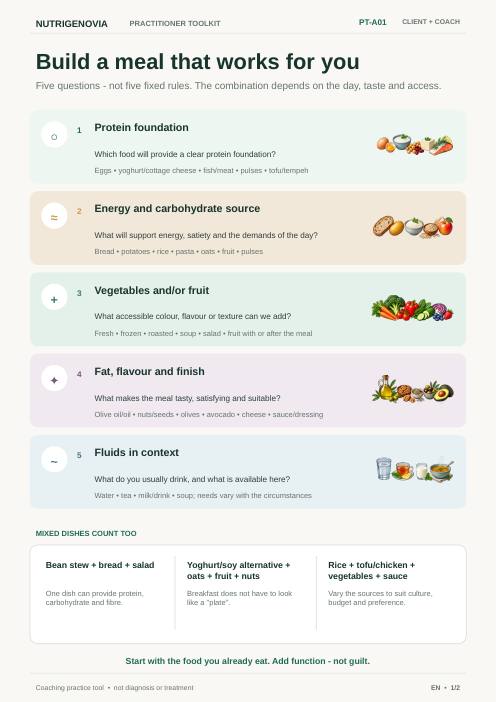
Build a Meal That Works for You
Five questions – not five fixed rules. The combination depends on the day, taste and access.
Free access
 Practitioner Toolkit
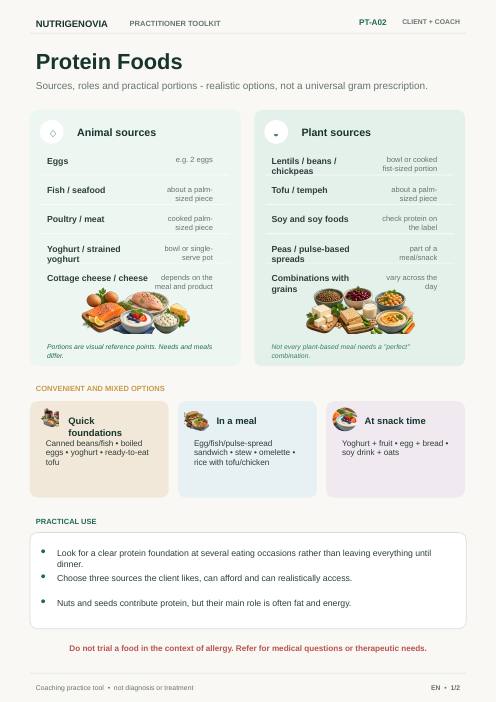
Protein Foods
Sources, roles and practical portions – realistic options, not a universal gram prescription.
Free access
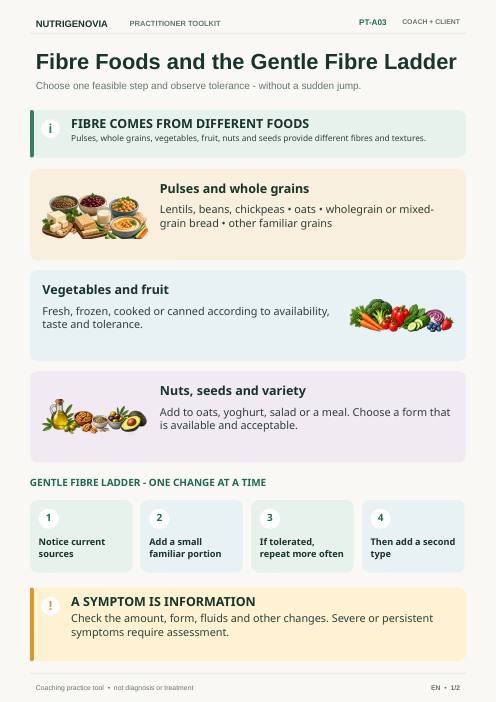 Practitioner Toolkit
Fibre Foods and the Gentle Fibre Ladder
Choose one feasible step and observe tolerance – without a sudden jump.
Free access
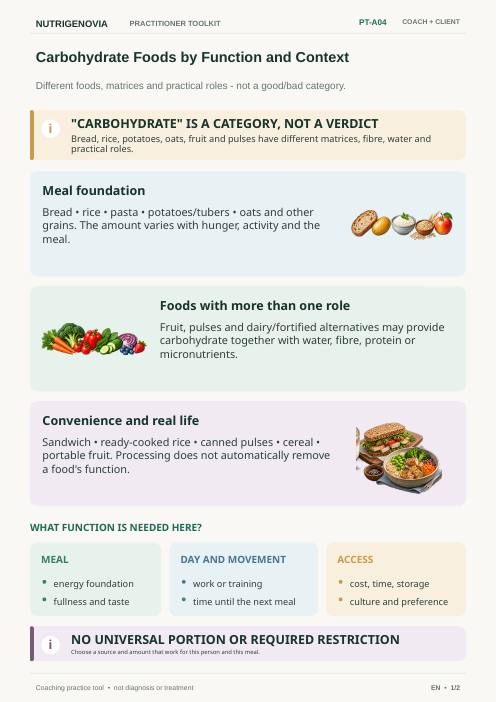 Practitioner Toolkit
Carbohydrate Foods by Function and Context
Different foods, matrices and practical roles – not a good/bad category.
Free access
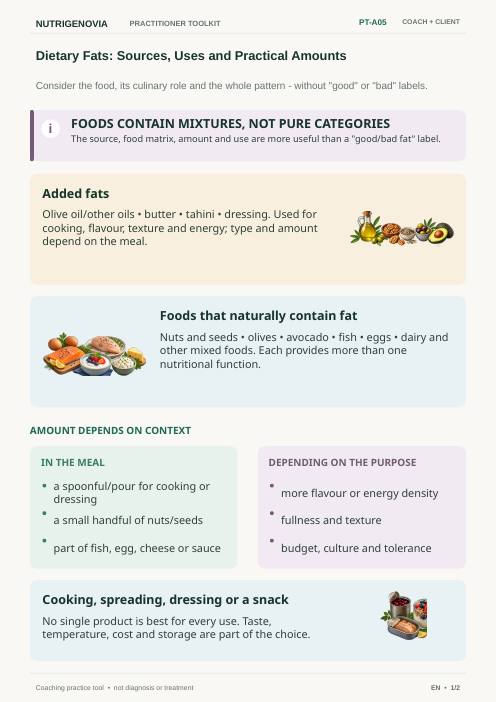 Practitioner Toolkit
Dietary Fats: Sources, Uses and Practical Amounts
Consider the food, its culinary role and the whole pattern – without “good” or “bad” labels.
Free access
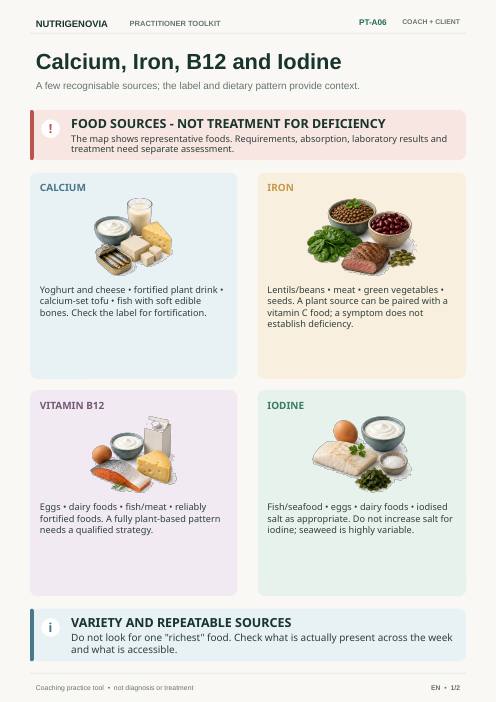 Practitioner Toolkit
Calcium, Iron, B12 and Iodine
A few recognisable sources; the label and dietary pattern provide context.
Free access
 Practitioner Toolkit
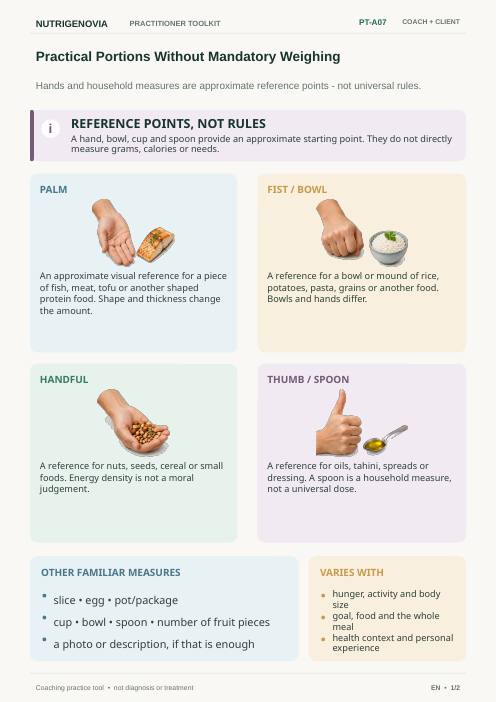
Practical Portions Without Mandatory Weighing
Hands and household measures are approximate reference points – not universal rules.
Free access
 Practitioner Toolkit
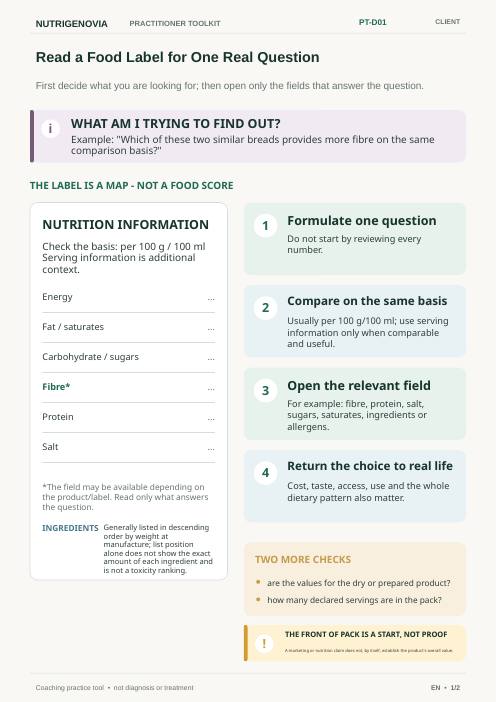
Read a Food Label for One Real Question
First decide what you are looking for; then open only the fields that answer the question.
Free access
 Practitioner Toolkit
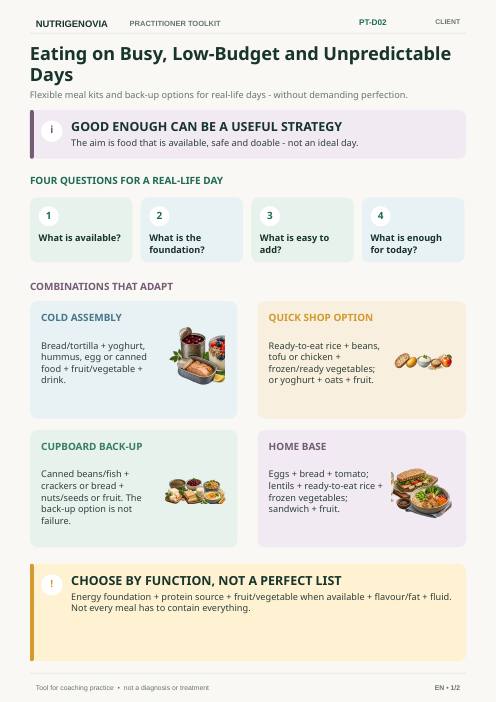
Eating on Busy, Low-Budget and Unpredictable Days
Flexible meal kits and back-up options for real-life days – without demanding perfection.
Free access
 Practitioner Toolkit
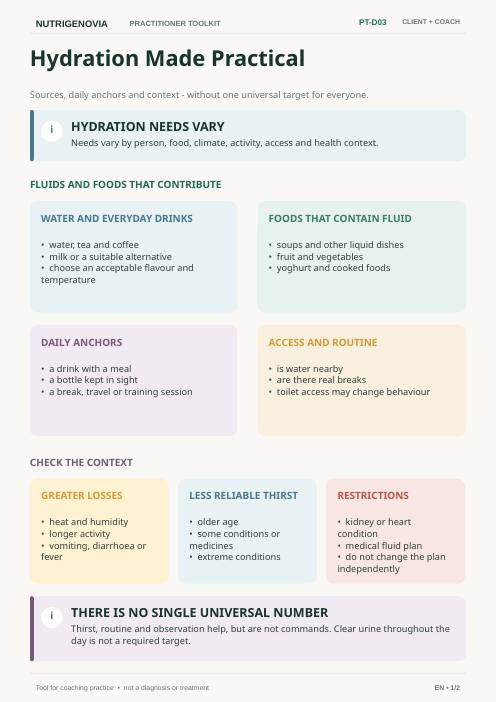
Hydration Made Practical
Sources, daily anchors and context – without one universal target for everyone.
Free access
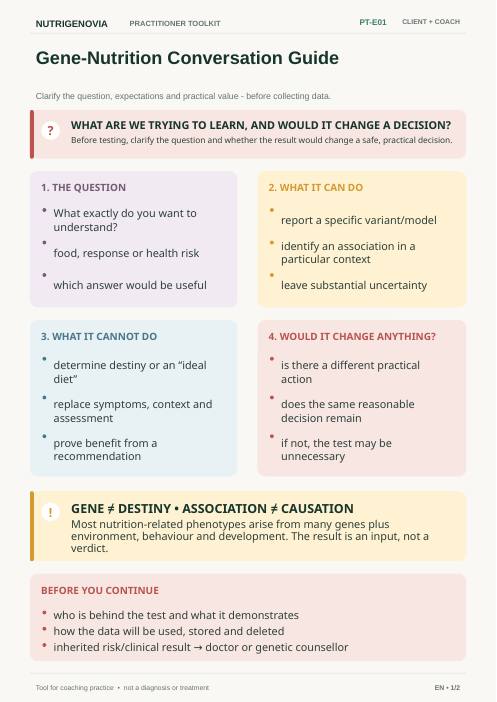 Practitioner Toolkit
Gene–Nutrition Conversation Guide
Clarify the question, expectations and practical value – before collecting data.
Free access
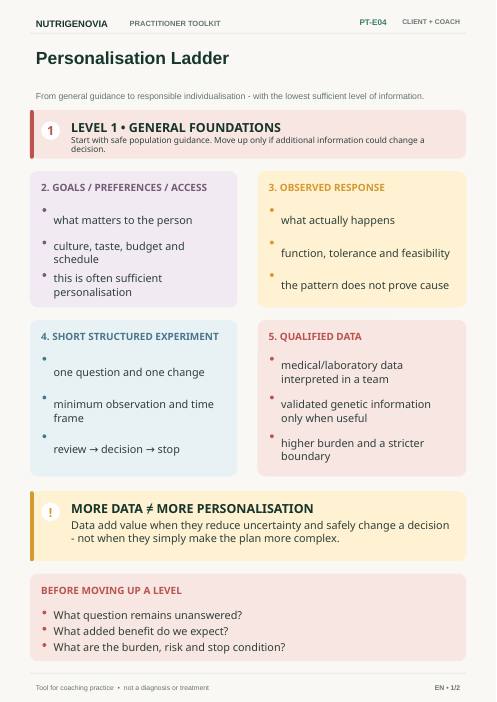 Practitioner Toolkit
Personalisation Ladder
From general guidance to responsible individualisation – with the lowest sufficient level of information.
Free access