
How Much of What We Call Discipline Is Actually Shaped by Our Environment?
Self-control around food is often reduced to willpower — whether we can resist a particular food or behaviour.
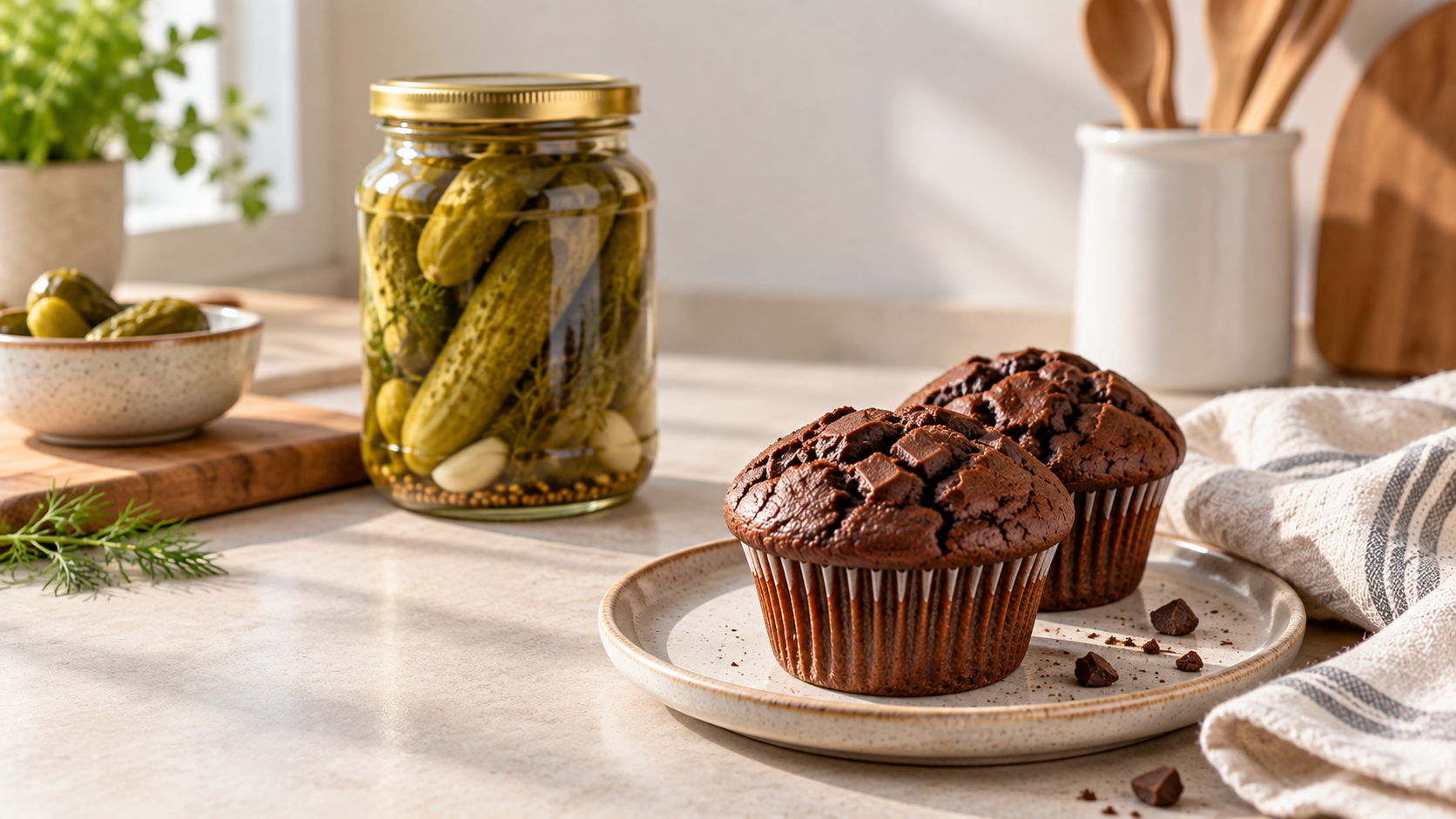
How availability, routine and small barriers shape the way we eat
Self-control around food is often reduced to willpower — whether we can resist a particular food or behaviour.
But the way we eat is more complex than that. It matters how hungry we are, how strongly we respond to appealing food, how we feel and whether we are consciously restricting what we eat. The situation in which we make a choice matters too — what food is around us, how easy it is to access and how much effort the alternative requires.
This broader picture is also the focus of a major review published in the Annual Review of Psychology in 2025. Drawing together what we know about self-control in eating, it shows why the explanation cannot simply be that some people have more willpower than others.
That raises an important question:
How much of what we call “discipline” is actually supported by the way we have organised our environment?
Self-control can begin long before the choice
We tend to notice self-control at the moment we have to resist something. But some of the work can happen much earlier.
Research on self-regulation describes strategies that involve changing the situation in advance so that the choice we want to make becomes easier and the alternative less immediate. Rather than relying on willpower every time, we can reduce the number of situations in which we need to call on it in the first place.
In everyday eating, this can look remarkably ordinary: what we buy, what we keep at home, what is ready to eat, what needs to be prepared first, and even where particular foods are kept.
Once these patterns become routine, the environment can start doing some of the work almost unnoticed. We may only realise how much it was helping when that environment changes.
Sometimes a jar is enough to change the situation
Consider an entirely ordinary situation.
You have decided what you want to eat. The food is there, but it needs cooking, defrosting or chopping. Or perhaps it is simply inside a jar that still refuses to open after ten minutes of determined effort.
Next to it are two chocolate muffins — ready to eat, appealing and immediately available.
At first glance, this is just an everyday inconvenience. But it illustrates something that research on food environments genuinely examines: convenience.
A systematic scoping review published in Appetite in 2024 included 243 studies on the subject. It found that convenience is not simply a matter of whether food is nearby. Time, physical and mental effort, and the skills required to plan, obtain, prepare and consume food all matter.
In other words, small barriers are part of the food environment too.
This does not mean that a stubborn jar “causes” someone to eat the muffins. It means that, in that moment, one option has become harder while the other is exceptionally easy. That changes the context in which the decision is made.
Availability is not the whole story
If proximity alone determined what we ate, our behaviour would be far more predictable. But not every food captures our attention in the same way.
The sight or smell of food, its packaging, an advertisement or even a photograph can act as food cues. These cues can evoke a desire to eat that does not always correspond to physiological hunger.
A meta-analysis of 45 publications involving 3,292 participants found a moderate association between responses to food cues, food craving and subsequent eating or weight-related outcomes.
Visual cues, such as photographs and videos, showed associations of a similar magnitude to exposure to real food.
This does not mean that seeing a muffin inevitably makes us eat it. The evidence supports a more measured conclusion: cues in our environment can contribute to the processes that shape desire and subsequent food choices.
What happens when the routine disappears?
Imagine someone whose usual food environment is well established. They tend to buy similar foods, follow a fairly consistent routine and rarely keep certain foods around.
That structure can work so smoothly that, over time, it becomes almost invisible.
Then, for a while, the routine changes. There may be more food at home than usual, desserts received as gifts, a different daily schedule, a celebration or a special occasion. A specific goal that had previously supported tighter control over eating may also have come to an end.
When eating changes, it is easy to conclude, “I simply lost control.” But that explanation may leave out much of what changed.
Motivation, routine, the foods available and the effort required to make different choices may all have shifted at the same time. None of these factors, on its own, proves what caused a particular episode. Together, however, they show why eating behaviour is rarely explained well by a simple “lack of willpower.”
Does strict control lead to exactly this?
If someone tightly controls their eating for a long period and then relaxes that control, it is tempting to assume that restriction inevitably leads to overeating.
The evidence does not support such a simple conclusion.
The 2025 review shows that the relationship between deliberate dietary restraint and later eating behaviour depends on what kind of restraint is involved, whether there is an actual energy deficit, how eating behaviour is measured, and what other individual and situational factors are present.
We therefore cannot say that restriction, by itself, inevitably leads to overeating. Still less can we look back at a single episode and identify its cause with certainty.
A more useful approach is to ask what changed around the choice: motivation, hunger, routine, the food available and how easy it was to access. That may not produce one neat answer, but it gives us a more realistic picture.
Routine does more work than we realise
When an eating routine works well, it is easy to take it for granted.
We do not have to decide from scratch what to buy every day. We do not face an internal battle every time we open a cupboard. Some decisions have already been made through the way we organise our daily lives.
Our behaviour can then look like pure discipline.
But discipline may include something else as well: creating conditions in which the preferred choice does not require a constant struggle.
That does not make self-control any less real. Choosing and shaping situations in advance can itself be a strategy for self-regulation.
Our environment does not decide for us
Recognising the influence of our environment does not mean that we have no choice.
The same kitchen, the same dessert or the same advertisement will not produce the same response in everyone. Hunger, emotions, what we have already eaten, individual preferences and other factors can all affect how we respond.
Our environment matters, but it does not determine our behaviour on its own. Willpower is not the whole explanation either.
This distinction helps us avoid two extremes: the idea that everything comes down to “strong character”, and the idea that people are powerless in the face of their surroundings.
Perhaps we are asking the question too late
We often start thinking about self-control only once the food is already in front of us: “Will I eat it or not?”
But it is worth looking a little earlier in the chain.
How did that food get there? What do we usually keep around us? What is easy to access? What requires more effort? What changes when our usual routine disappears? And how many decisions have already been made before we reach the moment when we are expected to “use willpower”?
This does not remove personal choice from the equation. It simply places that choice in the context in which it actually occurs.
Perhaps a supportive food environment is not a substitute for self-control.
Perhaps it is one of its most practical forms.
What can we conclude?
Eating behaviour is not determined by a single factor. The evidence suggests that self-control, hunger, motivation, food cues and the surrounding environment can all contribute to the choices we make, but it cannot tell us with certainty why one particular person ate in a particular way on a particular occasion.
An unusual experience can give us a good reason to ask a scientific question. The evidence should determine how far we can go with the answer.
Scientific sources were verified against PubMed and primary publisher records on 4 September 2026. Scientific findings are paraphrased rather than reproduced from the source publications.
References
- Mann T, Ward A. The Self-Control of Eating. Annual Review of Psychology. 2025;76(1):87–114. doi:10.1146/annurev-psych-012424-035404. PMID: 39094058.
- Bogard JR, Downs S, Casey E, Farrell P, Gupta A, Miachon L, Naughton S, Staromiejska W, Reeve E. Convenience as a dimension of food environments: A systematic scoping review of its definition and measurement. Appetite. 2024;194:107198. doi:10.1016/j.appet.2023.107198. PMID: 38176442.
- Duckworth AL, Gendler TS, Gross JJ. Situational Strategies for Self-Control. Perspectives on Psychological Science. 2016;11(1):35–55. doi:10.1177/1745691615623247. PMID: 26817725; PMCID: PMC4736542.
- Boswell RG, Kober H. Food cue reactivity and craving predict eating and weight gain: a meta-analytic review. Obesity Reviews. 2016;17(2):159–177. doi:10.1111/obr.12354. PMID: 26644270; PMCID: PMC6042864.